April 25, 2026 • Cara Meltzer • 8 min reading time • Prices verified June 5, 2026
Budget Blender Reality Check: What a $30–$50 Machine Can and Cannot Do for Your Smoothie Habit
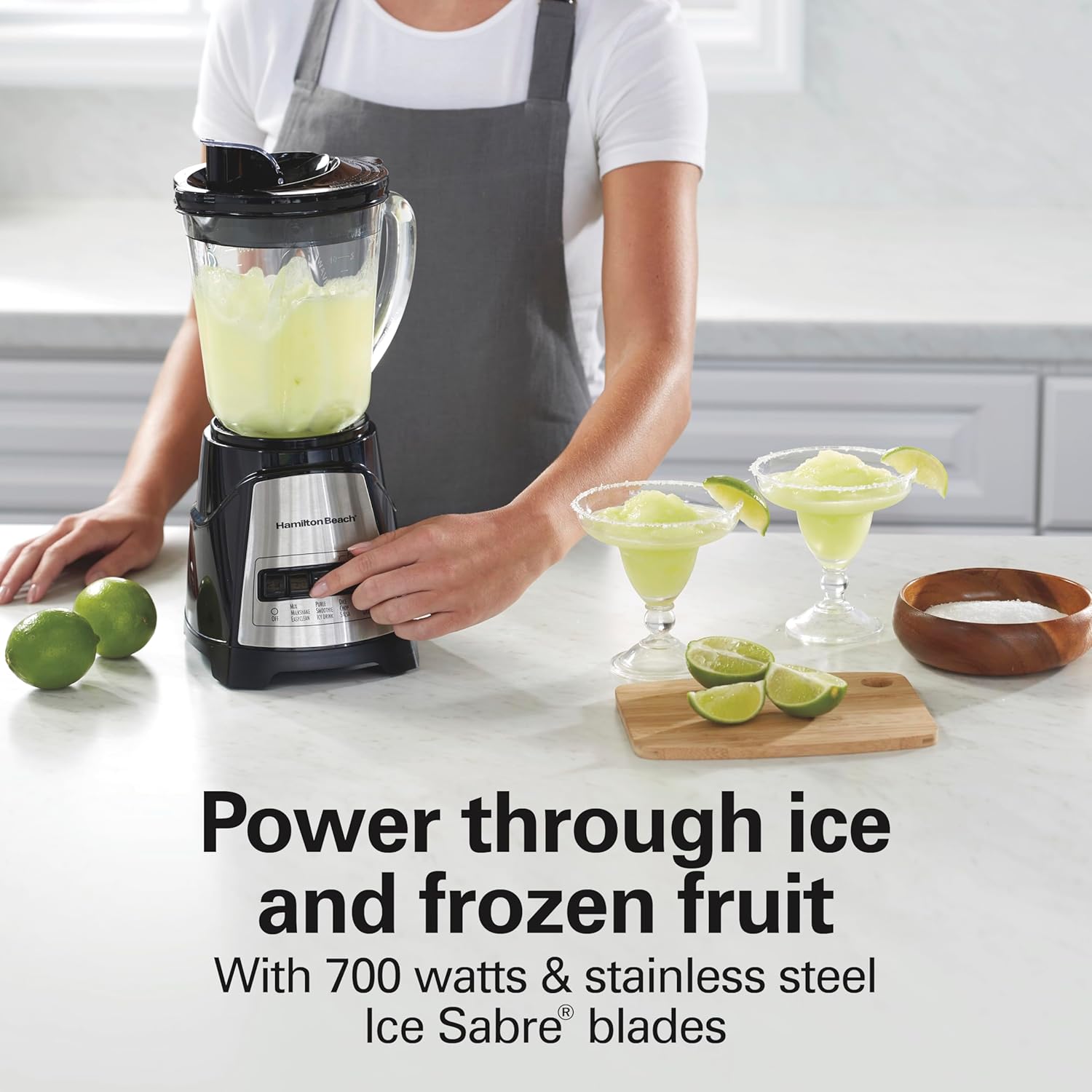
If you’ve ever stood in a big-box store aisle holding a $39 blender and thought, this can’t be that different from the $300 one — it has blades, a motor, a jar — you are not wrong to wonder. A blender, at its core, is exactly that: a motor that spins blades inside a container to break food down into smaller particles. The difference between a $39 machine and a $399 one isn’t magic; it’s motor power (measured in watts or horsepower — the faster the blades spin and the more force they generate, the smoother the result), blade geometry, container quality, and how long the whole thing holds together under daily use. This article is a straight-talk breakdown of what the under-$50 tier genuinely handles well, where it predictably falls short, and the decision rule for knowing which camp you’re in — so you’re not surprised three weeks into your smoothie habit.
What the $30–$50 Tier Actually Gets Right
Let’s give credit where it’s due, because the budget tier has gotten meaningfully better over the past few years.
Soft-ingredient smoothies are legitimately solid. If your typical blend is banana, frozen berries, yogurt, and a splash of juice or milk, a $40 blender will get there. These ingredients are low-resistance — the motor doesn’t have to fight hard, and even a modest 300–400 watt unit (manufacturer-rated figures) can produce a drinkable, reasonably smooth result. Good Housekeeping’s 2025 blender roundup consistently notes that budget-tier machines perform “acceptably” on soft-fruit smoothies, which is the honest baseline expectation.
The form factor works for single-serve use. Most sub-$50 models are personal or single-serve blenders — a 20–24 oz jar that doubles as a travel cup. For a solo user blending once a day, that footprint is genuinely convenient. You blend, swap on a lid, and go. No large pitcher to wash, no counter domination.
The math is hard to argue with at entry level. If you’re testing whether you’ll actually use a blender at all — whether the smoothie habit sticks — a $39 NutriBullet or Hamilton Beach Personal Blender is a low-stakes experiment. The cost-per-use math only works in a premium blender’s favor if you use it consistently; a $450 machine collecting dust is a worse investment than a $40 machine that gets used daily.
Short-term durability is usually fine. For occasional use — say, three to four times a week — owners across aggregated reviews generally report the under-$50 tier surviving one to two years without incident. The failure rate spikes with daily heavy use, which we’ll get to.
Where Budget Blenders Predictably Hit a Wall
This is the section most budget-blender marketing would prefer you skip. Here’s the honest breakdown, tradeoff by tradeoff.
Ice and Frozen Ingredients: The First Hard Stop
Frozen fruit from a bag is not the same as ice cubes. Frozen strawberries and mango chunks have some give — they’ve softened slightly with freezer moisture and break down at angles. Ice cubes are dense, uniform, and unforgiving. Budget blender motors (typically 300–500 watts manufacturer-rated) are not designed to pulverize ice repeatedly without thermal stress — meaning the motor heats up, the blades strain, and over time, both degrade faster than the spec sheet implies.
Wirecutter’s blender coverage has repeatedly flagged that sub-$100 blenders struggle with ice crushing, producing “chunky, uneven results” rather than the smooth blend premium machines achieve. If your smoothie habit includes protein shakes with ice, frozen açaí packets, or thick frozen-banana bases, you’ll hit this wall fast.
Leafy Greens and Fibrous Vegetables: Under-Extracted
Spinach and kale — two of the most popular smoothie additions — require blade speed and a vortex pattern (the circular pull that keeps ingredients cycling through the blades) to fully break down. Budget blender jar shapes are rarely optimized for this; ingredients pile up above the blade zone instead of circulating through it.
Serious Eats’ personal blender review noted that lower-tier machines “left visible green flecks” in leafy-green smoothies — not dangerous, but not the texture most people are aiming for. If greens are a daily ingredient for you, this is a consistent complaint in owner reviews across the category.
Nut Butters, Thick Batters, and Hard Ingredients: Out of Scope
Almonds, raw carrots, beets, flaxseeds — anything requiring sustained high-torque grinding is effectively outside the use envelope for sub-$50 machines. Consumer Reports’ blender buying guide draws a clear line here: food-processing tasks that require the blender to work against resistance for 60+ seconds continuously are where entry-level motors fail or overheat. Some budget models have thermal overload protection (a safety shutoff when the motor overheats) — which sounds like a feature but is really a cap on continuous-use capability.
Container Material and the Longevity Question
Most under-$50 blenders use generic plastic jars — not the Tritan copolyester or BPA-free Eastman plastics used in mid-tier and premium containers. After six to twelve months of daily use, reviewers consistently report scratching, cloudiness, and odor absorption. The scratching question also intersects with the microplastics conversation: degraded plastic surfaces shed more microparticles into blended contents. This isn’t a budget-blender-specific problem — it’s a plastic container problem — but premium tiers either use better-grade plastics with longer surface integrity or offer glass jar options. In the under-$50 category, glass is essentially nonexistent.
Noise: Not a Dealbreaker, But Worth Naming
Budget blenders are loud. Premium machines use motor mounts, insulated housings, and speed ramping to reduce peak decibels. Sub-$50 units don’t. If you’re blending at 6 a.m. in an apartment, you will hear about it. This is worth naming because it affects actual usage frequency — owners who find their blender disruptively loud blend less often.
The Real Tradeoff: Upfront Cost vs. Total Cost of the Habit
Here’s the math most budget-blender buyers don’t run before purchase.
By the numbers:
| Scenario | Machine Cost | Expected Lifespan (daily use) | Cost/Year |
|---|---|---|---|
| $40 budget blender, daily use | $40 | ~12–18 months | ~$27–$40/yr |
| $120 mid-tier personal blender | $120 | ~3–4 years | ~$30–$40/yr |
| $350 full-size mid-tier | $350 | ~5–7 years | ~$50–$70/yr |
| $450 refurbished Vitamix (certified) | ~$280–$320 | ~8–10 years | ~$32–$40/yr |
The per-year cost of a budget blender and a certified-refurbished premium unit start to converge faster than most people expect — especially when you factor in that the budget machine likely gets replaced once or twice. This is the cost-per-use math that closes the premium blender argument for daily users. For occasional users (three or fewer times per week), the budget tier’s economics stay favorable longer.
The Container Size Problem Nobody Talks About
Personal blenders in the $30–$50 range typically top out at 20–24 oz. That’s fine for one person. But smoothie habits often expand: you start adding more ingredients, you want to batch-prep two servings, you start blending for a partner or a kid. The moment you outgrow the jar size, you’ve outgrown the machine — there’s no upgrade path within the budget tier. Mid-tier machines like the NutriBullet Pro+ ($89–$110 range) or the Ninja Fit ($59–$79 range) sit just above the $50 ceiling but add larger jar options and noticeably stronger motors.
The Apartment Therapy appliance coverage notes this “jar ceiling” as one of the most common reasons buyers upgrade from entry-level to mid-tier personal blenders within a year of purchase — not because the machine broke, but because the habit grew.
Who Should Actually Buy in the $30–$50 Tier
Let’s be direct about this, because the tradeoffs above can sound like a takedown. They’re not. There is a real use case for a sub-$50 blender — it’s just more specific than the marketing implies.
Buy in this tier if:
- You’re genuinely testing whether a daily smoothie habit will stick before committing money to it
- Your ingredient list is soft fruit, yogurt, protein powder, and liquid — no ice, minimal greens
- You’re a single user blending four or fewer times per week
- Counter space and budget are both constrained and a larger machine isn’t feasible right now
Step up to the $80–$150 mid-tier if:
- You’re already blending daily and know the habit is established
- Greens, frozen fruit from dense packs, or protein-plus-ice combinations are regular ingredients
- You want a machine that will last three-plus years without replacement
- You’ve already replaced one budget blender and are reading this article for the second time
Consider the $250+ full-size tier if:
- You’re batch-prepping multiple servings, cooking for more than two people, or your blending extends beyond smoothies into soups, sauces, and nut-based recipes
- You’re treating the blender as a true kitchen workhorse rather than a single-task appliance
The Decision Rule
If the honest answer to “What will I blend?” is soft fruit, yogurt, powder, and liquid — and you’re not sure the habit will stick — a $30–$50 machine is a reasonable starting point, not a mistake. You’re buying optionality, not performance.
If the honest answer includes daily use, frozen-dense ingredients, greens, or any food processing beyond smoothies, the budget tier will disappoint you within six months. The math and the owner-review pattern both say the same thing: the $40 machine is cheap to buy and expensive to keep replacing. In that case, skip the budget tier entirely, put that $40 toward a mid-tier, and spend the next two weeks reading mid-tier comparisons instead.
The only real money mistake in this category is buying a $40 blender for a $150 habit.