May 16, 2026 • Cara Meltzer • 9 min reading time • Prices verified June 5, 2026
Beyond the BlenderBottle: Shaker Bottle Upgrades for Serious Gym Goers Who Want Less Clump
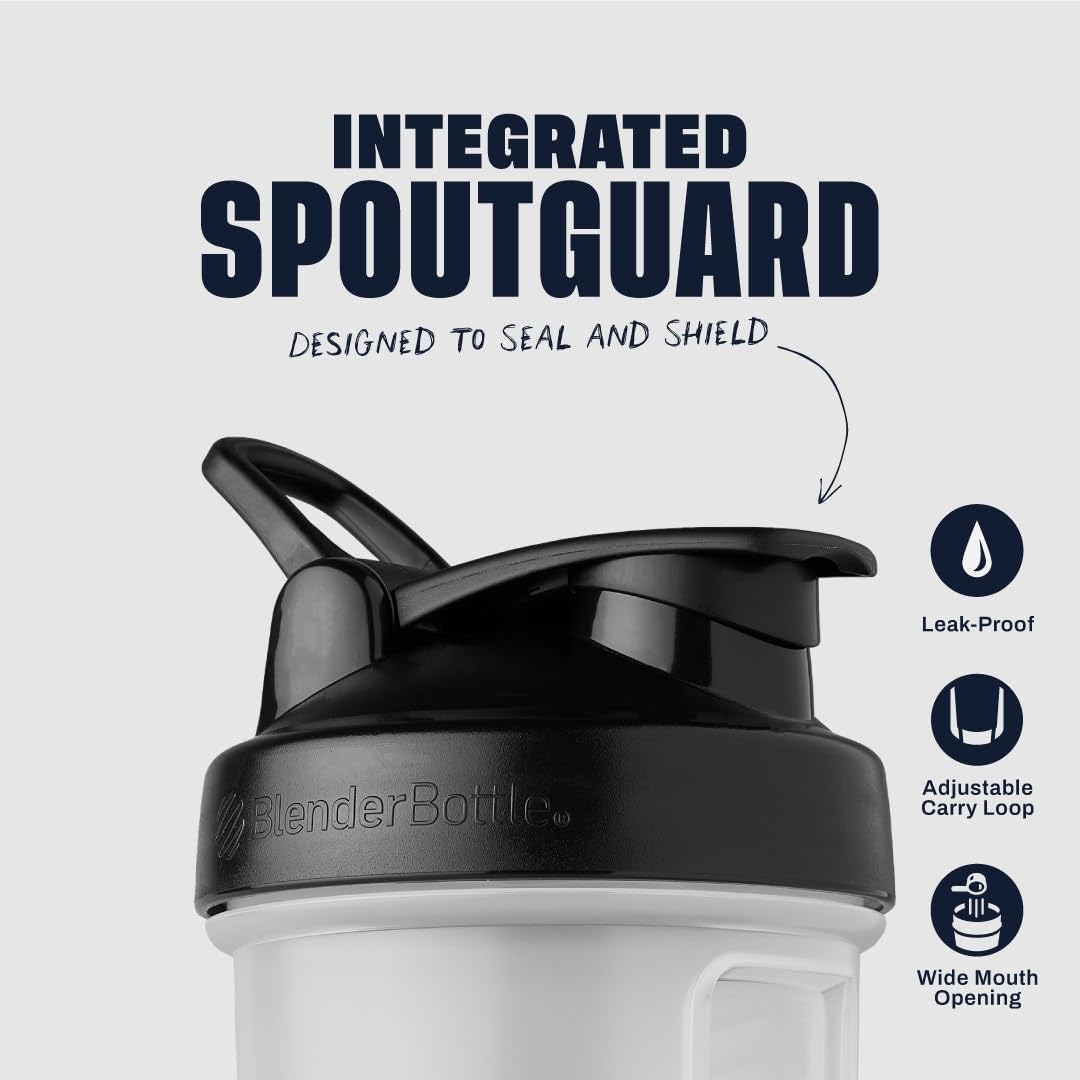
A shaker bottle is exactly what it sounds like: a lidded container you fill with liquid and protein powder (or any supplement powder), then shake by hand to mix. The most familiar version is the BlenderBottle Classic — that clear plastic bottle with a wire whisk ball rattling around inside. It’s affordable, it’s everywhere, and for a lot of gym-goers it was the first “real” piece of fitness gear they bought. But if you’ve graduated past beginner workouts and you’re now running daily protein protocols — meaning you’re mixing one or two shakes every single day — you’ve probably noticed the limits: powder clumped in the corners, a smell that won’t quit after a few months, or a lid that leaks in your gym bag at exactly the wrong moment. This guide is for the person who’s ready to spend $25–$60 on a bottle that actually solves those problems, and who wants to understand why one design beats another before clicking buy.
Why Your Current Shaker Bottle Is Probably Failing You
Let’s name the actual failure modes, because “I want something better” is hard to shop for without specifics.
Clumping is the most common complaint, and it’s almost never the powder’s fault. It comes down to mixing geometry. The original BlenderBottle wire whisk ball — technically called an agitator — works by creating turbulence as it bounces around. It’s a genuinely clever low-tech solution, but it has two weaknesses: it can’t reach the bottom corners of a wide-mouth bottle very effectively, and it loses efficiency as liquid volume drops (the last two inches of a 28 oz bottle, when you’re almost done, are the clumpiest). Reviewers at Wirecutter’s shaker bottle guide note that this dead-zone problem is especially pronounced with casein protein, which is thicker than standard whey isolate, and with creatine monohydrate, which needs aggressive agitation to fully dissolve.
Odor retention is a material problem. The vast majority of entry-level shakers are made from polypropylene (PP) or other standard food-grade plastics. These are safe — Consumer Reports’ overview of reusable bottle safety confirms food-grade PP doesn’t leach harmful compounds under normal use — but they are slightly porous at the microscopic level, which means protein residue works its way into the surface over time. After six months of daily use, that faint sour smell is essentially structural. You can’t scrub it out.
Lid reliability is a design and manufacturing tolerance issue. The BlenderBottle Classic lid works via a flip-top spout with a locking loop. That loop fatigues. Owners consistently report that the seal degrades after several months of heavy use — not immediately, but gradually, which makes it worse: you don’t notice until your gym bag smells like vanilla whey.
Understanding these three failure modes — mixing dead zones, material porosity, lid fatigue — is the whole decision frame for choosing an upgrade. Every premium shaker on the market is solving at least one of them. The best ones solve all three.
The Upgrade Landscape: What’s Actually Different at $30–$60
The shaker bottle market in 2026 segments pretty cleanly into three upgrade paths.
Path 1: Better Agitation, Same Plastic — The Hydra Cup Dual Shaker
Hydra Cup’s dual-compartment design is a genuinely different engineering approach. Instead of one chamber and one agitator, the bottle splits into two independent compartments — useful if you’re carrying pre-workout in one side and protein in the other, or separating creatine from your main shake. The mixing mechanism is still agitator-based, but the smaller chamber volume means the agitator has less dead space to miss. Owners in long-run reviews consistently note that the dual design eliminates the “watery top, clumpy bottom” stratification problem because each smaller volume mixes more completely.
The tradeoff: it’s more parts. The dual lid assembly has more seams, which means more potential leak points. Apartment Therapy’s shaker bottle roundup flags the Hydra Cup as a strong performer for mixing but notes that the lid requires more deliberate attention when closing compared to single-chamber designs.
Best for: Athletes running multiple-supplement protocols who are mixing two things per session. If you’re only mixing one powder, this is solving a problem you don’t have.
Path 2: Stainless Steel Construction — The Hydrojug Pro Shaker and Stainless King Options
Stainless steel solves the odor problem definitively. It’s non-porous, dishwasher-safe without degradation, and doesn’t pick up flavor from whatever you mixed last week. The Stainless King (marketed under the BlenderBottle brand umbrella) brings vacuum insulation — meaning your shake stays cold longer, which matters if you’re mixing post-workout and then sitting in a car for 30 minutes before drinking it.
The mixing mechanism is still a wire agitator in most stainless designs, so you’re not dramatically improving on clump performance unless the bottle is also narrower (which gives the ball less room to miss). The real win here is longevity and hygiene. Good Housekeeping’s nutritionist-tested shaker bottle guide highlights stainless construction as the clear winner for odor resistance and durability, with the caveat that the added weight (a stainless bottle is noticeably heavier than plastic, even empty) is a real consideration for gym bag packing.
By the numbers:
- Standard BlenderBottle Classic (28 oz): ~$12–$15, ~3.4 oz empty
- Stainless King (26 oz): ~$30–$35, ~8.6 oz empty
- Hydra Cup Dual Shaker (26 oz total): ~$20–$25, ~4.1 oz empty
- Promixx MiiXR electric shaker: ~$50–$60, ~9 oz empty
Weight doubles or triples in stainless. That’s the price of the upgrade.
Best for: Anyone who’s thrown out a plastic shaker because of smell. If you’ve done that more than once, stainless pays for itself in bottles you don’t have to replace.
Path 3: Motorized Mixing — The Promixx and Voltrx Electric Shakers
Electric shakers use a small battery-powered motor and a spinning vortex blade (not a blender blade — more like a tiny impeller) to mix the contents. No shaking required. You fill, press a button, and the motor does the work in 10–15 seconds.
This category completely eliminates mixing dead zones. The vortex pulls powder from the bottom corners and incorporates it into the liquid in a way no hand-shaking agitator can match. If your primary complaint is clumping — especially with difficult powders like casein, plant-based proteins (which tend to clump worse than whey), or creatine at higher doses — an electric shaker is the most direct solution.
The tradeoffs are real though. You’re managing a rechargeable battery, which means another thing to charge and another thing that can die. The motor housing adds bulk. And at $50–$60, you’re in pricing territory where the cost-per-use math only favors the purchase if you’re using it daily for at least a year. Reviewers at Wirecutter’s guide note the Promixx MiiXR as the category leader for mixing consistency, while flagging that the battery door on some units showed wear in long-run owner reports.
Best for: High-volume daily users, especially those mixing plant-based proteins or casein. Not worth it for someone who mixes three shakes a week.
The Microplastics Question — Honest Context
This comes up in reader questions frequently enough to address directly. Research published as of 2025-2026 has raised legitimate concerns about microplastic particles shedding from plastic food containers into beverages, particularly with warm liquids and mechanical abrasion. Consumer Reports has covered the ongoing research landscape and noted that the science is still developing — causative health conclusions are not yet established, but the exposure question is real.
The practical implication for shaker bottle buyers: if this is a concern for you, stainless steel construction is the cleanest answer available. Food-grade PP plastic (the standard for most shakers) is among the lower-risk plastics by current guidance, but it does shed particles over time, particularly as the surface degrades with repeated dishwasher cycles. Glass bottles exist but are obviously not gym-practical. Tritan plastic (a specific copolyester used in some premium water bottles) is marketed as more durable than standard PP, but the microplastics question applies to any plastic — the material difference is in chemical leaching risk, not necessarily particle shedding.
This is an honest “we don’t have a final answer yet” situation. What the research does support is that replacing a visibly scratched or cloudy plastic shaker is a reasonable precaution — surface degradation is where shedding accelerates.
The Decision Frame: If X, Then Y
Here’s the clean version of everything above compressed into a practical decision tree.
If your main problem is clumping and you’re mixing whey isolate (the most forgiving powder): upgrade your technique first — add liquid before powder, not the other way around — then consider the Hydra Cup dual design as a low-cost mechanical fix. If you’re mixing casein or plant-based protein and clumping is genuinely disrupting your protocol, skip the mechanical upgrade and go electric.
If your main problem is smell or hygiene: go stainless. Full stop. No plastic bottle at any price point fully solves porosity over a one-year daily-use timeline.
If you’re running a complex supplement stack (pre-workout + protein + creatine, mixed separately): the Hydra Cup dual-compartment design is the only non-electric option purpose-built for that workflow.
If you want the best mixing and you use the bottle every single day: an electric shaker like the Promixx MiiXR makes the cost-per-use math work. At $55 over 365 daily uses, that’s about $0.15 per use — comparable to what you’re spending on a mid-tier BlenderBottle over the same period when you factor in replacement cycles.
If weight in your bag matters: stay plastic. Stainless and electric shakers add meaningful weight, and if you’re walking to the gym or cycling, that’s a real friction point.
One thing worth knowing before you buy anything in this category: the upgrade that moves the needle most for most people isn’t the bottle at all — it’s the powder-to-liquid ratio and mixing order. Good Housekeeping’s testing notes consistently find that adding liquid first, then powder (not the reverse), reduces clumping across all bottle types by a significant margin. Get that right first. Then upgrade the hardware.
The BlenderBottle got you here. For daily serious use, though, you’ve probably outgrown it — and now you know exactly what to replace it with.